
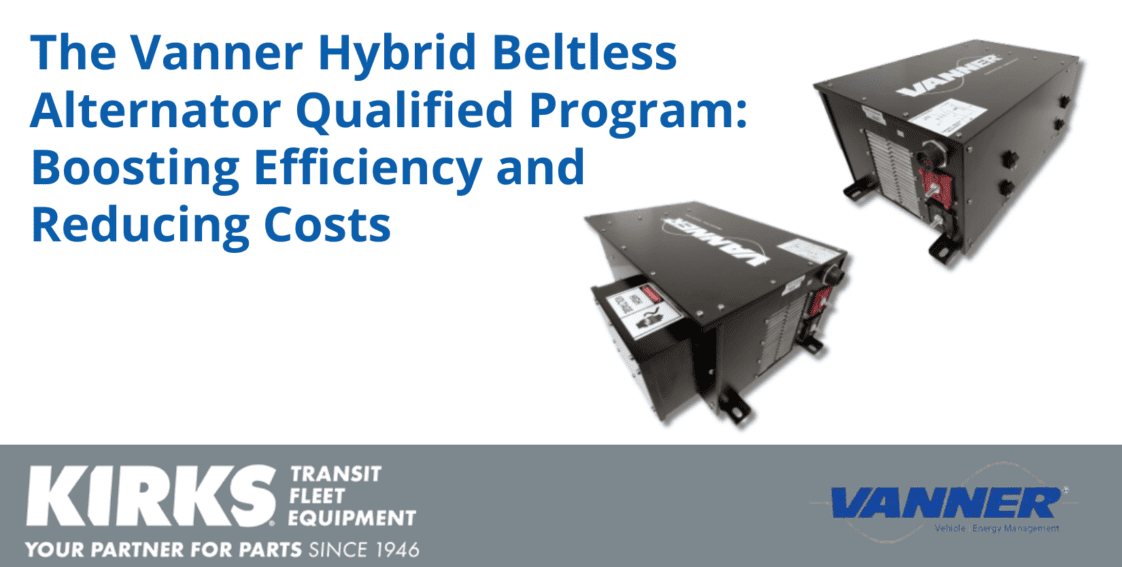
Vanner Hybrid Beltless Alternator (HBA) Qualified Program: Ensuring Seamless Upgrades
The Vanner Hybrid Beltless Alternator offers a compelling solution for fleet managers looking to optimize their operations. By reducing maintenance costs, improving fuel efficiency, and enhancing reliability, Vanner’s Qualified HBA represents a significant return on investment.
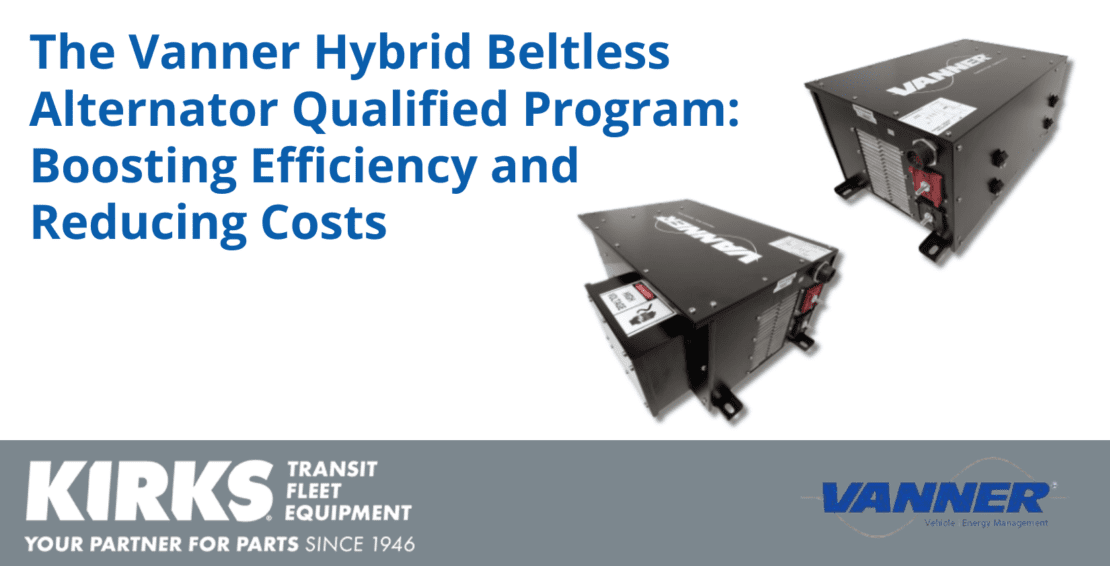
Quality Assurance: Vanner Qualified HBA Standard Units Completed
As a Vanner Qualified Program distributor, KIRKS delivers Vanner’s Qualified Hybrid Beltless Alternator units, upgraded with the latest hardware and software updates. This means you can trust you are receiving high-quality, qualified units in a timely manner.
Escaping the Low-Idle Power Deficit
According to duty-cycle evaluations recognized across public transit benchmarking by organizations like the American Public Transportation Association (APTA), urban transit buses spend roughly 40% to 50% of their operational drive cycle at curb idle or low speeds (0–750 RPM).
Traditional alternators fight a losing battle in these conditions:
- Current Drop at Curb Idle: Mechanical alternators suffer steep drops in amperage at low RPMs, right when the bus is idling at a stop with doors cycling, A/C or heat running, and fareboxes communicating.
- Thermal Choke: As engine compartment temperatures climb, conventional alternators lose efficiency and output capacity due to internal thermal resistance.
- Parasitic Drag: Belts, hydraulic tensioners, and idlers absorb valuable mechanical horsepower, chewing into your fleet’s overall fuel economy.
Vanner HBA Superior Efficiency
The solid-state Vanner HBA sidesteps these issues entirely. Because it operates independently of engine RPM, it delivers full, stable charging power even at curb idle, maintaining steady output across more than 85% of typical transit drive cycles.
The Vanner HBA provides an impressive 25-30% greater efficiency than traditional alternators, for greater fuel savings. Independent testing shows its efficiency at 1000 RPM surpasses 92%, compared to around 75% (or lower) for conventional models.
Quality and Fixed Pricing
The Vanner Qualified Program offers fixed pricing, includes all freight costs, and has no hidden fees.
The choice between traditional and innovative technologies can significantly impact budgets as bus and fleet maintenance managers work to meet governmental regulations and safety standards while managing HR and maintenance costs.
The Vanner Hybrid Beltless Alternator Qualified Program: Boosting Efficiency and Reducing Costs
Innovators in the transportation industry are constantly seeking ways to improve efficiency, lower operational costs, and reduce their environmental impact. These goals are paramount for fleet managers responsible for maintaining large bus or coach fleets.
One key area that is ripe for optimization is the power generation system. Traditional alternator technology is often inefficient, prone to failures, and expensive to maintain. The Vanner Hybrid Beltless Alternator (HBA) offers a compelling alternative.
A Tale of Two Buses: Conventional vs Vanner’s Hybrid Beltless Alternator (HBA)
Let’s look at two buses: one equipped with a conventional alternator and the other leveraging Vanner’s advanced hybrid beltless alternator.
Vanner’s Hybrid Beltless Alternator provides continuous, clean, and stable DC power across all temperatures and speeds. This ensures precise, maintenance-free power delivery, which is especially beneficial for environmentally conscious bus operations. Its robust design is built to outlast the mid-life of most buses, often accompanying them throughout their entire lifespan.
Why Choose the Vanner Hybrid Beltless Alternator?
The Vanner HBA represents a significant advancement in power conversion technology. Here’s why it should be on your radar.
Vanner Qualified Air-Cooled Hybrid Beltless Alternator (HBA)
– 24V DC power; 300 amp single or 600 amp dual configurations with dynamic charging
– Replaces belt-driven alternator, supplies 24V for chassis batteries and accessories like power steering and cooling fans

Why Roof-Mounted Solid-State Architecture Wins
Traditional alternators live in the harshest part of the bus: the greasy, baking environment of the lower engine bay.
The Vanner HBA relocates the electrical workload to the roof or dedicated exterior equipment areas near the energy storage system (ESS), resulting in these advantages:
- Lighter Payload: At least 25% lighter than heavy mechanical alternators, shaving off continuous dead weight and saving hundreds of gallons of fuel over the vehicle’s lifespan.
- Cooler Operating Temps: Relocating the conversion hardware out of the engine compartment protects the unit from engine heat spikes and oil contamination, dramatically reducing road calls.
- Zero Mechanical Wear Components: No V-belts, pulleys, tensioners, or separate external mechanical regulators to slip, bind, or seize.
- Technician Ergonomics: Roof-access placement means simpler, cleaner diagnostics without having to work under hoist constraints or snake through tight, grease-packed engine compartments.

- Vanner HBA
- Battery or ESS
- DPIM Power Inverter
Maintenance technicians appreciate the easy roof access of the Vanner HBA because it ensures a safer and simpler installation process.
Reduced Maintenance by Eliminating Parts
As you move toward vehicle electrification, eliminate costly downtime and emergency road calls related to alternator issues. Vanner’s HBA removes the need for these high-maintenance parts:
- Alternators
- V-belts
- Voltage regulators
- Pulleys and idle tensioners
- Hydraulic lines and fittings
- Moving parts
The Vanner Qualified Program: Reliable Cores, No Guesswork
When an HBA unit eventually reaches mid-life overhaul or requires maintenance, fleet managers often find themselves boxed in: either pay exorbitant OEM dealer prices with unpredictable lead times, or risk sending a complex high-voltage conversion unit to an unqualified local rebuilder.
Through the Vanner Qualified Program, KIRKS delivers genuine, fully tested Vanner HBA units upgraded to the latest factory hardware and firmware specifications.
All Vanner HBA units are built in the USA and fully compliant with Buy America standards.
Here’s how to take advantage of Vanner’s HBA Qualified Program through KIRKS:
Following this process helps us streamline your request and provide a quick turnaround of the qualified units.
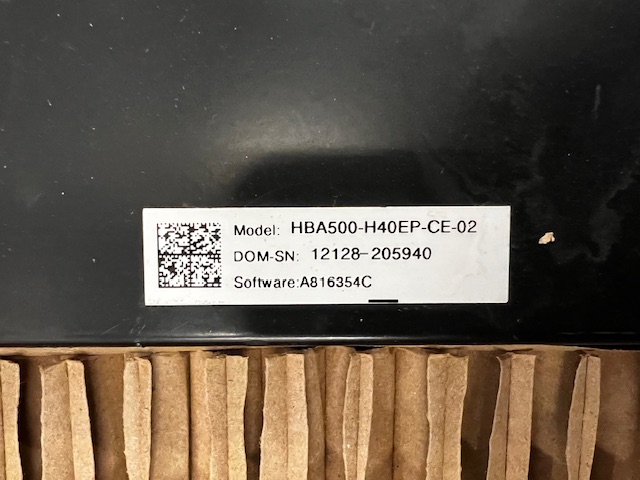
- Send the Tag Image: To initiate the qualified repair process, KIRKS requires an image of the Vanner Product label on the core needing repair.
Snap a photo of the following information on the tag:- Model Number
- Serial Number
- Product Information of the Unit
- Upfront Quote: Once we receive the above information, KIRKS will provide a quote for repair and return of the customer’s core.
- Hassle-Free Core Pickup: Upon receipt of a purchase order, KIRKS will email a service return number (SR#) and BOL (Bill of Lading) for pickup of the customer’s core for repair and return.
- Returned Ready to Run: KIRKS will return the qualified repaired unit to the customer via prepaid freight.
Don’t let aging low-voltage power systems drain your shop’s time and budget. KIRKS helps you escape the parts trap with reliable OEM and Approved Equal™ solutions backed by responsive support and fixed-cost turnaround.
Connect with a KIRKS parts specialist today to keep your hybrid fleet charged and rolling.
Frequently Asked Questions about the Vanner HBA and the Vanner Qualified Program
1. How does a solid-state Vanner HBA differ mechanically from a traditional transit alternator?
Instead of using mechanical rotation, internal bearings, slip rings, and wear-prone V-belts to generate power, the Vanner Hybrid Beltless Alternator (HBA) taps directly into high-voltage DC power from the hybrid energy storage system (ESS) or traction drive and electronically steps it down to steady 24V DC.
2. Why do transit buses frequently suffer low-voltage charging issues at curb idle with standard alternators?
Standard mechanical alternators require high engine RPMs to generate their rated output. In urban transit routes, buses spend roughly 40% to 50% of their duty cycle idling at curbs or creeping through heavy traffic. At low engine speeds, mechanical alternator output plunges right as the vehicle demands maximum 24V DC current for passenger door cycles, fareboxes, destination signs, electric cooling fans, and HVAC blowers. The solid-state Vanner HBA delivers full rated power across all engine speeds, even at dead curb idle.
3. What parts are permanently eliminated when running an HBA system?
Because the HBA utilizes solid-state power conversion electronics rather than mechanical drive assemblies, it completely removes:
- Alternator drive belts (V-belts or serpentine)
- Belt tensioners, idler pulleys, and mounting brackets
- Hydraulic drive lines, fittings, and hydraulic motors (on hydraulic-drive setups)
- Internal mechanical wear items such as brushes, slip rings, and mechanical bearings
4. How does the KIRKS Vanner Qualified Program keep maintenance costs predictable?
Rather than dealing with unpredictable “time and material” shop bills or long lead times from coach OEMs, the Vanner Qualified Program provides fixed-price repairs with no hidden surcharges. All freight logistics are covered up front. After receiving your image of the tag with Product, SN, and Software, KIRKS sends an authorized Bill of Lading (BOL) and Service Return number (SR#) for your core pickup, overhauls the unit to factory specs with the latest engineering upgrades, and ships it back via prepaid freight.
5. What information is required to initiate a core repair and return through KIRKS?
To kick off the process, snap a clear photo of the manufacturer data tag on your core unit. The label must show the Vanner Model Number, Serial Number, and Software. Emailing this image to your KIRKS parts specialist allows our team to confirm compatibility, verify current firmware/hardware update paths, and issue an immediate, locked-in quote along with return shipping documentation.