
Don’t Bench a Good Battery: Are You Charging and Testing Your Odyssey® TPPL AGM Batteries Correctly?
Upgrading transit buses and heavy-duty vehicles to high-performance ODYSSEY® TPPL AGM batteries requires updating standard shop procedures to protect warranties and maximize service life.
This quick guide walks maintenance teams through critical EnerSys® charging, rest period, and testing protocols, from avoiding false diagnostic reads to selecting high-power shop chargers. Following these procedures keeps your fleet reliable and prevents premature battery replacements.
Think of a premium heavy-duty Odyssey® TPPL AGM battery like a high-performance, precision-tuned race engine sitting under the hood of a heavy-duty work truck. You wouldn’t pour standard 87-octane fuel into a high-compression racing engine and expect it to run at peak efficiency, nor would you use a basic handheld code reader meant for a sedan to diagnose a modern transit bus.
When fleet maintenance teams upgrade to top-tier Absorbed Glass Mat (AGM) Thin Plate Pure Lead (TPPL) technology, they are investing in extreme durability and serious cranking power.
Bringing these high-capacity powerhouses into the shop requires an update to your team’s standard operating procedures to avoid misdiagnosed “dead” batteries, rejected warranty claims, and unnecessary fleet downtime.
To keep your fleet moving smoothly and ensure you get every ounce of value out of your investment, EnerSys® has established precise charging and testing guidelines. Here is the playbook your technicians need to follow to maintain battery health and satisfy warranty standards.
Maintaining premium heavy-duty Odyssey® Thin Plate Pure Lead (TPPL) Absorbed Glass Mat (AGM) batteries requires proper shop procedures.*
To maintain manufacturer warranties and maximum battery life, maintenance teams must follow specific testing and charging guidelines outlined by the manufacturers of Odyssey Heavy Duty Batteries, EnerSys®:
- Verify Open Circuit Voltage (OCV): If a battery tests below 12.60V OCV, it must be fully charged before evaluation. (If the battery OCV ≥ 12.60 V, proceed to # 4.)
If not, charge the battery fully (# 2)
- Use High-Power AGM Chargers: EnerSys® recommends shop chargers with a minimum current of 10% of the battery’s C20 rate (40% recommended) to ensure full charge saturation. Low-amp trickle chargers won’t properly restore deep-cycle AGM units.
- The ODYSSEY® recommended shop chargers:
• Odyssey OSC-105A and OSC-07A
• Associated 6366
• Associated IBC6008
• Autometer BPC-100 - Allow a 24-Hour Rest Period: After a full charge cycle, let the battery rest off-charger for 24 hours to dissipate surface charge before final diagnostic testing.
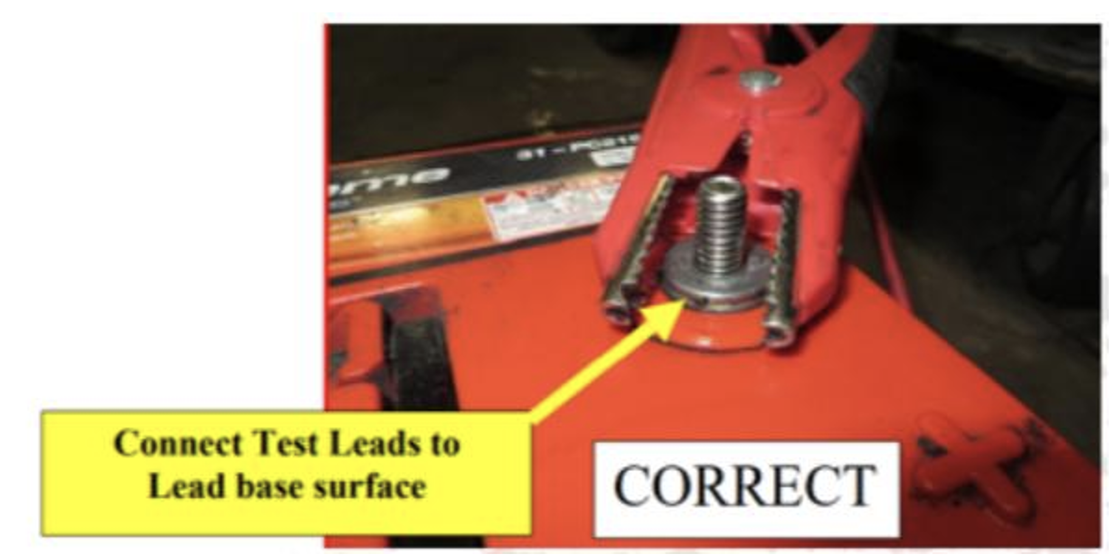
- Mind Your Test Connections: When performing load or conductance testing, never attach test leads directly to the threaded terminal studs. Connecting directly to the lead base surface or fully seated SAE terminal adapters avoids added resistance that distorts test readings.
Odyssey Handheld Conductance/Impedance Tester
Using the handheld conductance/impedance tester with the following procedure should help determine whether the battery has sufficient capacity and cranking power.
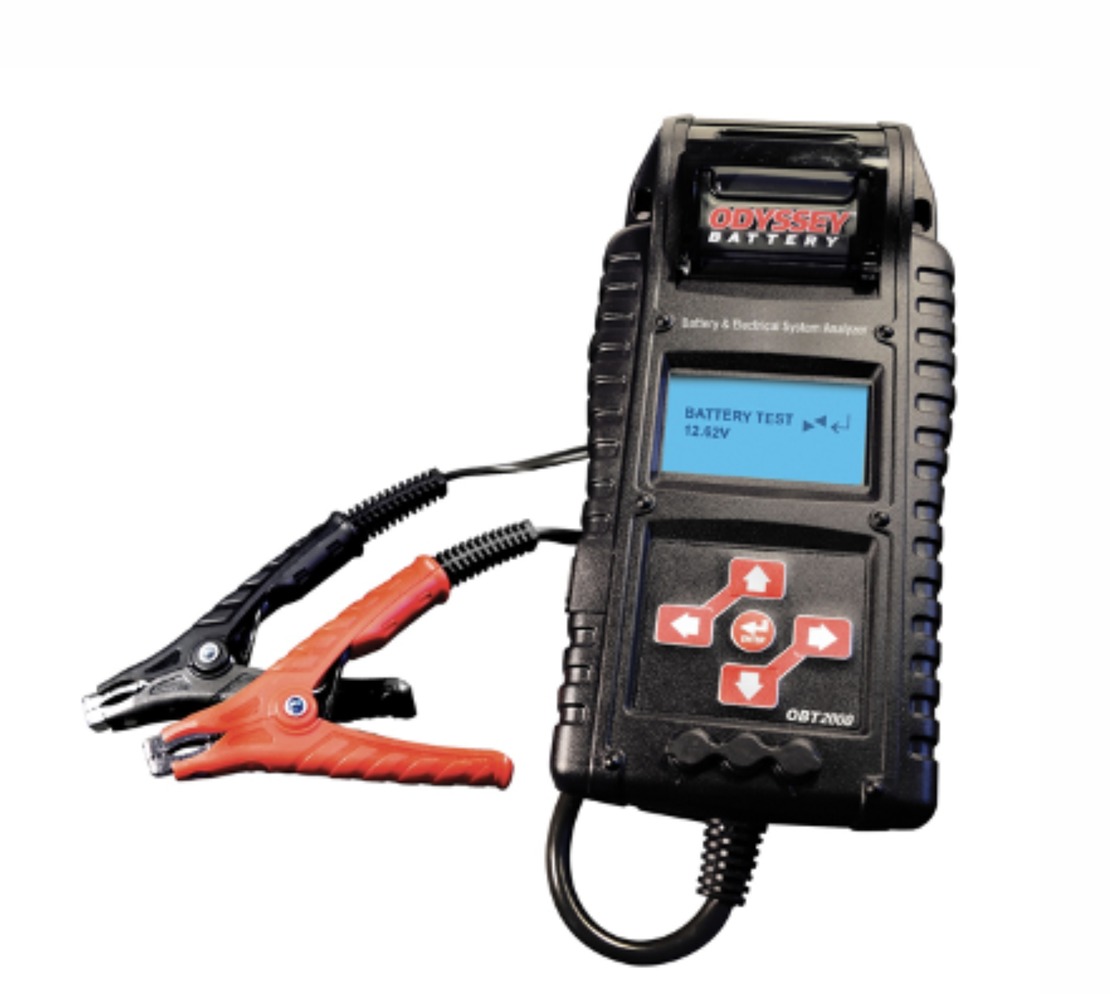
1. Input the correct CCA for the battery being tested. Be sure to select the proper battery type, starting AGM, spiral AGM, or Pure Lead (preferred).
2. Replace the battery under warranty if it tests Failed/Bad/Replace.
3. If the battery tests Pass/Good, return the battery to the customer.
Make Proper Connections to the Odyssey Battery
Never connect charger or tester clamps directly to the threaded stud on the battery.
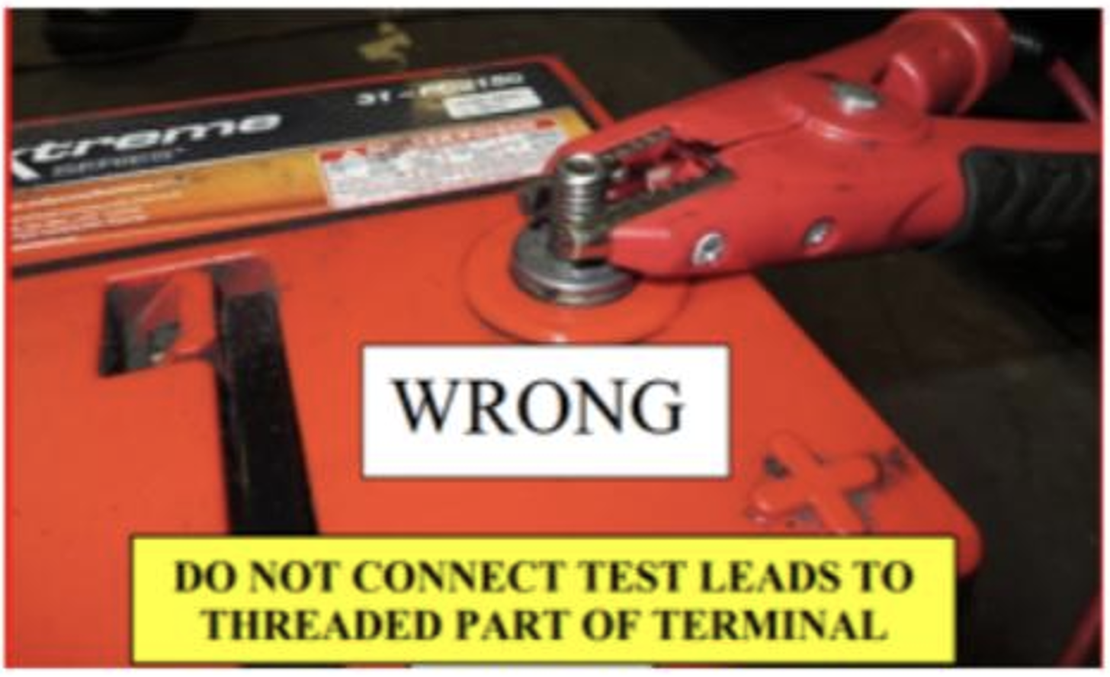
For proper test results, connect the clamps to the lead base or install an adapter onto the stud.
½ CCA (Cold Cranking Amps) Load Test for Heavy Duty Odyssey Batteries
The CCA load test procedure can help determine whether the battery has sufficient cranking power or is reaching end of life. Perform the load test separately on each battery.
1. Connect the portable load tester as shown in the diagram:
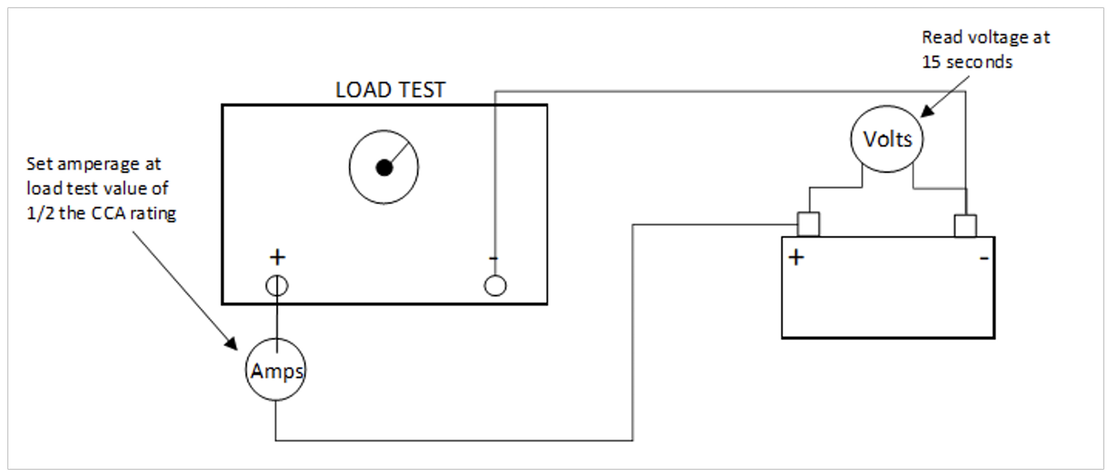
2. Adjust the load current to ½ of the battery CCA rating.
3. Apply the load and read the battery voltage at 15 seconds
4. Measure battery temperature. After 15 seconds, read the battery voltage on the voltmeter:
• If the battery temperature is around 70°F or higher, the battery must have a voltage > 9.60 V, it can be returned to service.
• For lower battery temperatures, the battery should be rejected.
See the minimum acceptable voltage table below.
Batteries that do not meet the minimum voltage in the chart are considered suspect and warrantable.
| Temperature | End of Test Voltage |
| 70°F or Higher | 9.60V |
| 60°F | 9.50V |
| 50°F | 9.40V |
| 40°F | 9.30V |
| 30°F | 9.10V |
| 20°F | 8.90V |
| 10°F | 8.70V |
| 0°F | 8.50V |
When you treat high-performance batteries right, they return the favor with extreme durability and a long service life.
Ready for a Tech Upgrade? Check out real-time condition monitoring with the ODYSSEY® Connect monitoring system
Knowing the current status of your bus’ batteries is as easy as pulling out a tablet with ODYSSEY® Smart Batteries equipped with the ODYSSEY® Connect monitoring system. Read more in our article, Smarter Power for Your Fleet: ODYSSEY® Connect Batteries with Bluetooth Technology Keep Your People Moving
Navigating specialized component requirements shouldn’t feel like a high-stakes guessing game. When your shop takes a disciplined, knowledgeable approach to testing and maintaining high-performance Odyssey® TPPL AGM units, you eliminate unnecessary battery scraps, lower operating costs, and keep your vehicles out of the bay and on the road.
For more information on testing and charging heavy-duty Odyssey® batteries, or to place an order for your shop, talk with a KIRKS Parts Specialist today.
*Please refer to your owner’s manual or consult a battery professional for more details about your specific application.
Frequently Asked Questions (FAQs)
Q: Why can’t I use a standard trickle charger on my ODYSSEY® TPPL AGM battery? A: Low-amp trickle chargers lack the necessary current required to properly restore deep-cycle AGM and TPPL batteries. EnerSys® recommends shop chargers provide at least 10% of the battery’s C20 rate (40% recommended) to achieve full charge saturation and prevent premature capacity loss.
Q: Why is it wrong to connect test clamps directly to the threaded terminal studs?
A: Threaded terminal studs introduce electrical resistance that can significantly distort diagnostic readings on conductance or load testers. To get accurate test results, always attach charger or tester clamps directly to the lead base surface or onto fully seated SAE terminal adapters.
Q: Why do I need to wait 24 hours after charging before testing a TPPL AGM battery?
A: A fresh charge leaves a residual “surface charge” on the battery plates that can cause diagnostic equipment to give a false positive reading. Allowing a 24-hour rest period off the charger dissipates this surface charge, ensuring your diagnostic readings reflect the battery’s true state of health.
Q: What Open Circuit Voltage (OCV) indicates an ODYSSEY® battery needs charging before testing?
A: If an ODYSSEY® battery registers an Open Circuit Voltage (OCV) below 12.60V, it must be fully charged using an approved high-power charger before any diagnostic evaluation or load testing can be accurately performed.
Q: How does a ½ CCA load test determine if a battery should be returned to service? A: The ½ CCA load test applies a load equal to half the battery’s Cold Cranking Amps rating for 15 seconds. If the voltage stays above 9.60V (at 70°F or higher), the battery has sufficient cranking power and is safe to return to service. Batteries failing to meet minimum voltage thresholds based on temperature are considered suspect and warrantable.