
Delco Remy Heavy Duty Starting Power: The 39MT, 42MT, and 150MT Showdown
Article Summary:
Delco Remy Heavy Duty Starting Power: The 39MT, 42MT, and 150MT Showdown
Not all heavy-duty starters are created equal. This guide breaks down Delco Remy’s three heavy-duty starter powerhouses: the legacy 42MT straight-drive workhorse, the versatile 39MT gear-reduction smart starter, and the next-generation 150MT built for extreme durability.
Whether you’re managing aging transit buses or investing in future-ready vehicles, understanding these design approaches will help you select the starter that matches your fleet’s real-world demands. Because when a diesel giant needs to wake up, there’s no snooze button.
Waking up a sleeping diesel bus takes a sudden, explosive burst of raw energy. For transit and coach operators, you need to keep people moving, and your vehicles need to wake up (start) without hesitation.
Over the last few decades, the way heavy-duty starters deliver that wake-up call has undergone a massive engineering evolution.
“Heavy-duty” isn’t a one-size-fits-all label. It means radically different things depending on the age, application, and the level of abuse your fleet dishes out daily.
That’s why we’re comparing Delco Remy’s heavy-duty starters, the 39MT, 42MT, and the 150MT.
Is your operation better served by the heavy-metal, positive-shift impact of the legacy 42MT? The fast-cranking, smart soft-start finesse of the 39MT? Or the extreme, long-lifecycle endurance of the 150MT? The 150MT is the new kid on the block, introduced in 2023 as the future of starting power.
“The 150MT takes into account everything we’ve learned over the years from our top-selling 39MT. Plus it includes all future OE requirements,’ says Brian Koehlinger, Senior Sales Manager.’ The result is a starter that goes beyond to give greater durability, startability, and reliability.’” 1
Delco Remy has designed its heavy-duty starter lineup to meet the challenges posed by big diesel engines. Let’s crack open the technical evolution of these three heavy-duty starters.
The Top 5 Similarities and Differences of the Delco Remy Heavy-Duty Starters: 39MT, 42MT, and 150MT
The 39MT, 42MT, and 150MT Delco Remy’s heavy-duty starters are all engineered for large diesel engines, but they come from different design families. We’re talking gear reduction vs. straight drive vs. next-gen gear reduction, with varying pinion configurations, protection features, and mounting options.
1. Tooth Count (Pinion Teeth & Pitch): The Gearing Guts
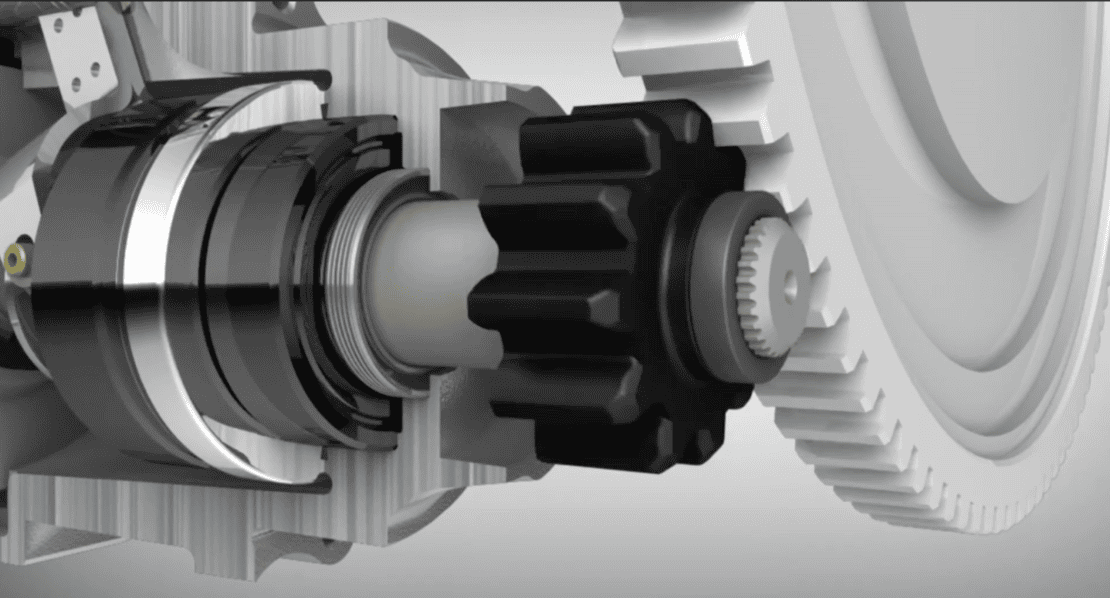
Image Credit: Delco Remy – Starter Differences | Delco Remy Heavy Duty Starters
What it means:
Tooth count equals the number of teeth on the pinion gear. Pitch equals the angle and spacing of those teeth ( 6–8 pitch, 8–10 pitch, MOD 3 metric). The pinion must match the flywheel/ring gear tooth count and pitch, or you’re going nowhere fast.
Delco Remy 39MT
Gear reduction starter.
Pinion options:
- 11 tooth, 6–8 pitch
- 12 tooth, 8–10 pitch
- 12 tooth, MOD 3 (metric)
These are the same core pinion families used throughout Delco’s heavy-duty gear-reduction product line.
Delco Remy 42MT
Straight drive (direct drive) starter.
Pinion options:
- 11 tooth, 6–8 pitch
- 12 tooth, 8–10 pitch
- 13 tooth, 8–10 pitch
- 11 tooth, MOD 3 (metric)
- 12 tooth, MOD 3 (metric)
The 42MT has more pinion variants than the 39MT, including a 13-tooth option and additional metric options.
Delco Remy 150MT
Next-gen gear reduction starter.
Pinion options:
- 11 tooth, 6–8 pitch
- 12 tooth, 8–10 pitch
- 12 tooth, MOD 3 (metric)
These match the 39MT’s pinion families, but the 150MT meets next-generation OEM requirements and offers exceptional durability under the hood.
Similarities:
All three can be built with 11-tooth (6–8 pitch) or 12-tooth (8–10 pitch or MOD 3) pinions. But here’s the key: tooth count alone isn’t how you select a starter. You’ve got to match by application or part number cross-reference, because pitch and layback/chamfer matter just as much.
Differences:
The 42MT includes that 13-tooth option and more metric variants. The 39MT and 150MT share the same basic pinion families, but the 150MT is a completely different animal internally, with different gearing, torque characteristics, and more.
2. Delco Remy Starter Design: Where Their Personality Shows Up
With heavy-duty starters, there are two dominant designs: straight drive and gear reduction.
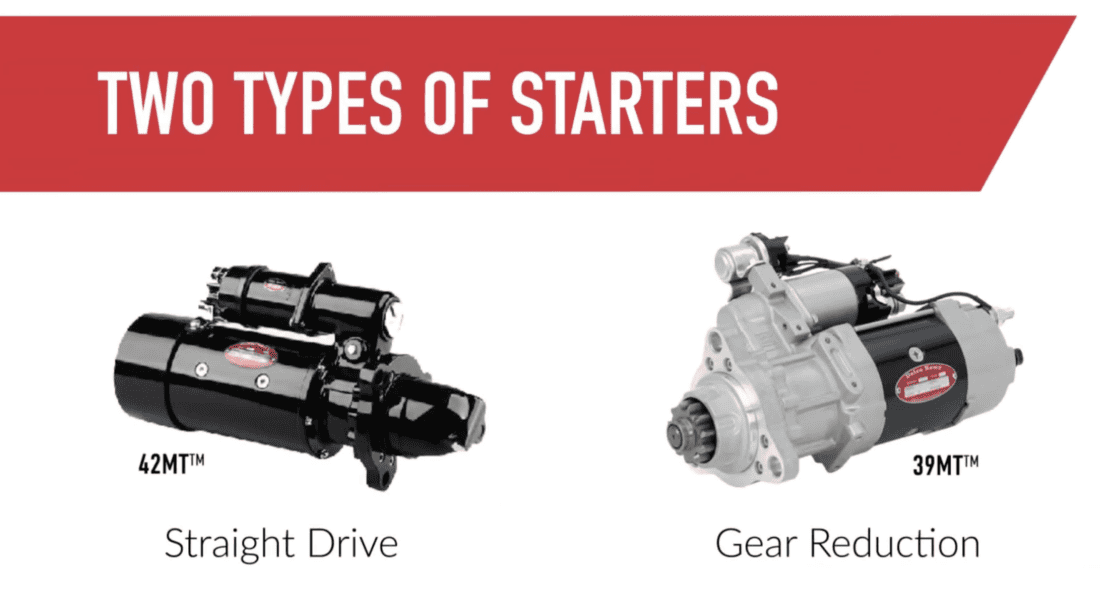
Image Credit: Delco Remy – Starter Differences | Delco Remy Heavy Duty Starters
Delco Remy 39MT
Motor Type: Gear reduction, wound-field with planetary gear set.
This is the noseless starter with electrical soft-start engagement. The pinion rotates slowly into the ring gear before full cranking kicks in, saving the gear teeth from abutment damage.
With a sealed solid-link solenoid and sealed noseless configuration, there is less debris and less moisture for more reliable performance.
Typical use: Up to 15 L (12V) or 16 L (24V) engines.
Delco Remy 42MT
Motor Type: Straight drive (direct drive), wound field, no gear reduction.
The 42MT has a nose cone to house an additional bearing: it’s a classic heavy-duty direct-drive DNA. The rotatable drive housing (nose) offers up to 12 flange-alignment positions for flexibility.
Typical use: Larger engines, up to about 24 L (depending on voltage and core).
Delco Remy 150MT
Motor Type: Gear reduction, wound field, next-generation design.
Think of the 150MT as an evolved 39MT with its noseless, soft-start engagement system. It has updated mechanical rigidity, optimized gear ratio, and improved thermal overcrank protection.
Designed for: 12V up to 16 L and 24V up to 18 L engines, with higher peak output and seriously improved startability under high battery loading.
Similarities:
All models are heavy-duty, clockwise rotation starters with SAE mounting flanges. All use wound-field motors and overrunning clutch drives.
Differences:
- 39MT and 150MT = gear reduction. 42MT = straight drive.
- 39MT and 150MT = noseless with electrical soft-start. 42MT = nose cone with traditional direct-drive engagement.
- 150MT = the newest design with higher torque, improved thermal protection, and support for next-gen OEM electrical systems.
3. Starter Delay (Integrated Magnetic Switch / IMS Behavior): The Smart Start Question
Delco Remy doesn’t plaster “starter delay” times all over their brochures. What they do talk about is the difference between older and newer models:
Older Starters: Relay (magnetic switch) mounted on the firewall or battery box.
Modern Starters: Integrated Magnetic Switch (IMS) on the starter itself, controlling engagement timing and protecting against improper cranking sequences.

Image Credit: Delco Remy – Starter Differences | Delco Remy Heavy Duty Starters
Delco Remy 39MT
Uses an integrated magnetic switch (IMS) as standard on service models as part of the “smart starter” concept. Delco Remy makes a serious point never to remove the IMS, or it will void the warranty.
Electrical soft-start effectively ramps up pinion speed before full cranking. Soft start is a controlled engagement delay that protects your gears like a bodyguard.
Delco Remy 42MT
The 42MT has a classic straight-drive design, though many 42MT cores and older replacement units do not have an integrated IMS on the starter itself.
Still want overcrank protection? You can add it via an external kit with a separate magnetic switch mounted away from the engine.
Engagement with the 42MT is more direct. It has less of that built-in “soft start” delay found with the 39MT/150MT.
Delco Remy 150MT
The 150MT is designed as a “smart starter” with integrated IMS and integrated overcrank protection (iOCP) standard on service models.
It has controlled engagement, thermal protection, and no external wiring required for OCP (depending on the exact part number).
Next-level engagement behavior is optimized for modern engine electronics and higher electrical loads.
Similarities:
All starter models use a magnetic switch to engage the starter solenoid. All are designed to prevent damage from improper engagement sequences.
Differences:
- 39MT and 150MT have integrated IMS as standard. 42MT often relies on an external relay/switch unless rebuilt with an IMS kit.
- 39MT/150MT have soft-start engagement that effectively delays full cranking speed. 42MT engages more directly.
4. Overcrank Protection (OCP / iOCP): The Thermal Damage Shield
Overcrank protection (OCP) acts as a built-in circuit breaker. It automatically resets the operating temperature to protect the starter from thermal damage. iOCP refers to Delco Remy starters that have integrated overcrank protection.
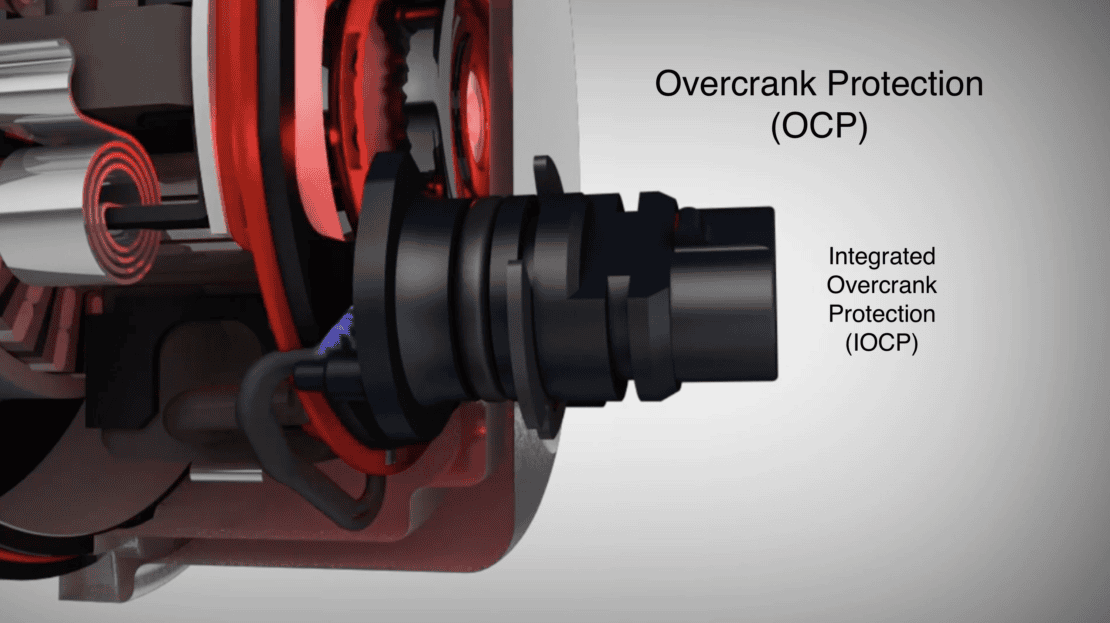
Image Credit: Delco Remy – Starter Differences | Delco Remy Heavy Duty Starters
Delco Remy 39MT
Service models come standard with Overcrank Protection (OCP) as a built-in thermal circuit breaker.
OCP monitors internal temperature and stops cranking when things get too hot, then automatically resets at a safe temperature. Some versions may require a customer wiring connection; others have an integrated OCP (iOCP), depending on the part number.
Delco Remy 42MT
Standard 42MT starters do not include OCP as built-in.
OCP can be added via an aftermarket kit that installs a new CE terminal/lead/thermostat assembly and an external magnetic switch (relay). Translation: overcrank protection is optional and requires additional wiring compared to the 39MT/150MT.
Delco Remy 150MT
Designed with reliability and long-life operation baked in, including overcrank thermal protection as a standard feature.
Many 150MT service starters include integrated OCP (iOCP), which doesn’t require special customer wiring for the protection to function. This is one of the key “next-gen” improvements over the 39MT in adverse starting conditions.
Similarities:
All starter models can be protected against overcrank damage if the system is wired correctly (either built-in or via an add-on kit).
Differences:
- 39MT: OCP is standard on service models; some require wiring, some integrated.
- 42MT: OCP is not standard; must be added via kit with external relay.
- 150MT: Integrated OCP is standard on many service models with no extra wiring needed for protection.
5. Mounting Flange: The Installation Flex Factor
The mounting flange is where the starter aligns to the engine. Delco Remy offers rotatable and custom designs.
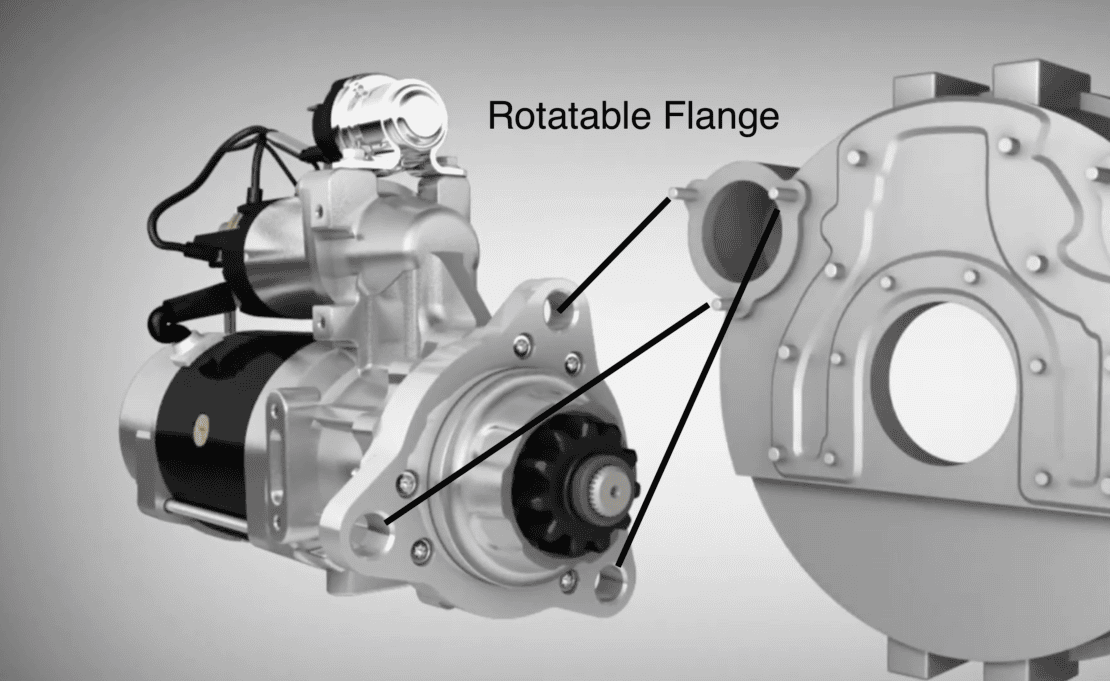
Image Credit: Delco Remy – Starter Differences | Delco Remy Heavy Duty Starters
Delco Remy 39MT
Mounting: SAE #1 (12V) and SAE #3 (12V/24V), depending on configuration.
Rotatable flange: Technicians can easily remove the flange screws, rotate the flange to the desired position, and reinstall the screws. This one starter has many applications. Delco markets this as the only OE starter with a truly rotatable flange design. That’s flex.
Delco Remy 42MT
Mounting: SAE #1 and SAE #3.
Rotatable drive housing (nose) has up to 12 positions that can be indexed to align the flange. It’s a different concept than the 39MT’s rotatable flange plate, but still gives technicians installation flexibility.
Delco Remy 150MT
Mounting: SAE #1, SAE #3, and customer-specific as required.
Delco Remy doesn’t advertise a rotatable flange like the 39MT. Instead, the 150MT uses standardized mounting options and is designed to meet specific OEM flange patterns. The focus here is on meeting next-gen OEM patterns rather than universal rotatable flange coverage.
Similarities:
All models use SAE mounting flanges (primarily #1 and #3). All are designed for heavy-duty truck and off-highway applications.
Differences:
- 39MT: Distinctive rotatable flange plate for universal coverage.
- 42MT: Rotatable nose housing for flange alignment—not the same “rotatable flange plate” concept as 39MT.
- 150MT: Multiple SAE and custom patterns, but not marketed as having a rotatable flange like the 39MT.
The Delco Remy Starter Specs at a Glance
| Feature | 39MT | 42MT | 150MT |
| Design | Gear reduction, noseless, soft-start | Straight drive, nose cone | Gear reduction, next-gen, noseless |
| Pinion options | 11T 6–8, 12T 8–10, 12T MOD 3 | 11T 6–8, 12T 8–10, 13T 8–10, plus metric | 11T 6–8, 12T 8–10, 12T MOD 3 |
| Rotation | Clockwise | Clockwise / Counterclockwise | Clockwise |
| Starter delay | IMS integrated; soft-start engagement | Often external relay; direct engage | Integrated IMS + iOCP; soft-start |
| Overcrank protection | OCP standard on service models | Not standard; add-on kit required | Integrated OCP standard on many models |
| Mounting flange | Rotatable flange plate (unique) | Rotatable nose housing (12 positions) | SAE #1/#3 + custom; no rotatable flange advertised |
| Weight | 14 kg / 30.8 lbs | 14 kg / 58 lbs | 14.4 kg / 31.75 lbs |
| HeavyDuty Drive | Electrical Soft-Start, Engagement System, Overrunning Clutch | Two-piece rotatable drive housing (12 or 24 positions); Positive Engagement; Rubber Shock Absorber | Electrical Soft-Start Engagement System Overrunning Clutch |
Which Delco Remy Heavy Duty Starter Belongs in Your Fleet?
What kind of starting power does your fleet need?
Go with the 42MT if you’re running legacy heavy-duty applications that demand straight-drive simplicity and don’t mind adding overcrank protection as an aftermarket upgrade. It’s old-school muscle.
Choose the 39MT if you want gear reduction efficiency, soft-start protection, and Delco Remy’s genius rotatable flange that makes installation headaches disappear. OCP comes standard on service models, and the noseless design keeps debris and moisture out.
Step up to the 150MT if you’re investing in the future. Next-gen design with integrated overcrank protection, higher peak output, and improved startability under brutal battery loads. This is the starter that takes everything Delco Remy learned from the top-selling 39MT and evolves it to meet tomorrow’s OE requirements.
That’s the Delco Remy heavy-duty starter lineup.
Still not sure which Delco Remy heavy-duty starter is the right fit? Your KIRKS Parts Specialist is here to help you find it.
Escape the Trap with KIRKS
As a fleet maintenance professional managing public transit, motorcoach, or heavy-duty off-road equipment, you know the symptoms. A transit bus clicks, refuses to crank, and suddenly you’re staring down a bus that won’t start.
We’ve listened to techs and maintenance managers who are feeling stuck in the parts trap.
Your options? Do you buy an inferior aftermarket part with an unreliable history, or head back to the bus manufacturer for an overpriced replacement?
The Delco Remy 39MT, 42MT, 150MT on KIRKS’ Parts Page
KIRKS sources new OEM and Approved Equal™ parts at competitive pricing and works to keep them in stock, including heavy-duty starting powerhouses from Delco Remy.
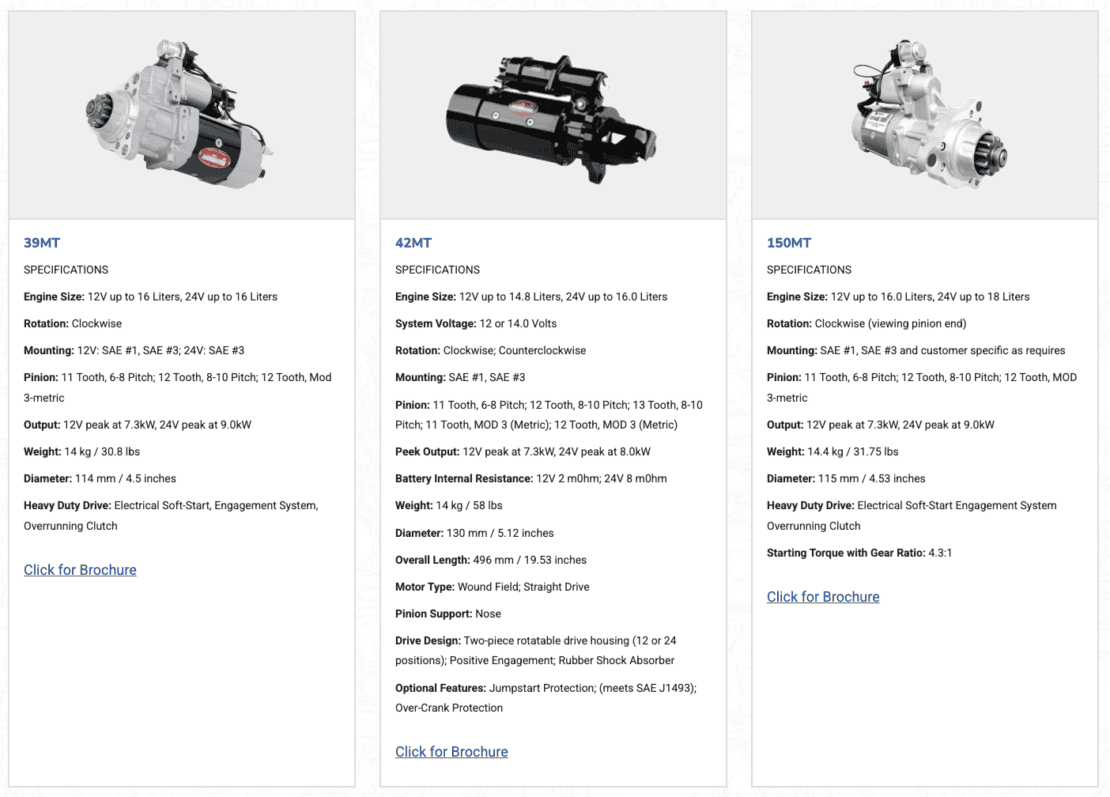
Click to view the 39MT, 42MT, and 150MT brochures on KIRKS Delco Remy Parts Page.
Whether your fleet depends on the heavy-duty legacy muscle of the 42MT, the versatile inventory-saving rotatable flange of the 39MT, or the next-generation endurance of the 150MT, you don’t have to stay stuck with overpriced manufacturer parts.
KIRKS is your trusted partner for parts. We stock genuine OEM components alongside our rigorously tested Approved Equal™ solutions to keep your vehicles moving safely, efficiently, and within budget.
Ready to upgrade your fleet’s starting reliability? Connect with a KIRKS parts specialist today to access our national distribution networks and find the perfect match for your equipment.
Frequently Asked Questions (FAQs)
Q: What’s the main difference between the 39MT, 42MT, and 150MT starters?
A: The core difference is design philosophy. The 42MT is a straight-drive (direct-drive) starter with a nose cone—old-school muscle with direct power transfer.
The 39MT is a gear-reduction starter with a noseless design and soft-start engagement that protects gears during cranking.
The 150MT is the next-generation evolution of the 39MT, featuring enhanced gear reduction, integrated overcrank protection (iOCP), higher torque output, and support for modern OEM electrical systems. All three handle heavy-duty diesel engines, but they deliver starting power in fundamentally different ways.
Q: Can I swap between a straight-drive 42MT and a gear-reduction 39MT or 150MT on the same vehicle?
A: Yes—in most applications, straight-drive and gear-reduction starters are interchangeable as long as the pinion tooth count, pitch, and mounting flange match your engine’s flywheel/ring gear configuration. The beauty of Delco Remy’s lineup is flexibility: you’re not locked into one technology forever.
However, always cross-reference by application or part number to ensure proper pitch, layback, and electrical compatibility. When in doubt, consult a KIRKS parts specialist to confirm the correct match for your specific equipment.
Q: What is overcrank protection (OCP), and why does it matter for my fleet?
A: Overcrank protection is Delco Remy’s built-in thermal circuit breaker that monitors your starter’s internal temperature during extended cranking cycles. When the starter overheats, OCP automatically stops cranking to prevent thermal damage, then resets once it cools to a safe temperature. For transit and coach fleets facing harsh weather, frequent starts, or challenging conditions, OCP is mission-critical.
The 39MT includes OCP standard on service models (some require wiring). The 42MT requires an aftermarket OCP kit with external wiring. The 150MT features integrated OCP (iOCP) with no extra wiring needed: it’s next-level protection out of the box.
Q: What is the advantage of the 39MT’s rotatable flange?
A: The 39MT’s rotatable flange plate is a game-changer for inventory management and installation flexibility. You can remove the flange screws, rotate the flange to any desired position, and reinstall it, allowing one starter to cover multiple applications. Delco Remy markets this as the only OE starter with a truly rotatable flange design. This means fewer part numbers to stock, faster installations, and less downtime hunting for the “right” flange orientation.
The 42MT offers a rotatable nose housing (up to 12 positions), but it’s a different concept. The 150MT uses standardized SAE and custom OEM flange patterns without rotatable capability.
Q: Which Delco Remy starter should I choose for my fleet?
A: It depends on your fleet’s age, application, and operational demands:
- Choose the 42MT if you’re maintaining legacy heavy-duty vehicles (up to 24L engines) that require straight-drive simplicity and you’re comfortable adding overcrank protection as an aftermarket upgrade.
- Choose the 39MT if you want proven gear-reduction efficiency, soft-start gear protection, standard OCP on service models, and that brilliant rotatable flange for installation flexibility (up to 15L/16L engines).
- Choose the 150MT if you’re investing in long-term durability and future-ready technology. It delivers
Let’s keep your people moving. Talk with a KIRKS Parts Specialist Today!
References
1 Delco Remy Jan 2023 150MT Starter
Starter Differences | Delco Remy Starter and Alternator 101 Series
Understanding Different Starter Engagement Types | Delco Remy Tech Tip
Dual Input IMS Starter | Delco Remy Tech Tip
Delco Remy 42MT Starter | Over Crank Protection
Delco Remy 42MT Starter | Semi-Solid Link Solenoid
https://www.delcoremy.com/starters/find-by-model-family/42mt#features
Product Brochures