
Remanufactured Calipers: Restoring the “Muscle” to Your Air Disc Brakes
If a transit bus were a heavyweight lifter, the air compressor would be the lungs, drawing in the breath needed to perform. The caliper would be the bicep. When the signal comes to stop, that muscle has to flex with incredible force and precision for safe braking.
A worn caliper is like a muscle that hasn’t seen a gym in years—it might look fine under a sleeve, but under the pressure of a transit bus on a 6% grade, it’s prone to cramping (seizing up) or giving out entirely.
When a caliper has passed its prime, that doesn’t mean it’s destined for the scrap bin.
A KIRKS REMAN™ caliper, however, is the ‘muscle’ that’s been through a professional training camp. We’ve stripped away the fatigue, reinforced the ‘tendons’ (seals and bushings), and ensured it has the grit to flex 1,000 times a day without breaking a sweat.
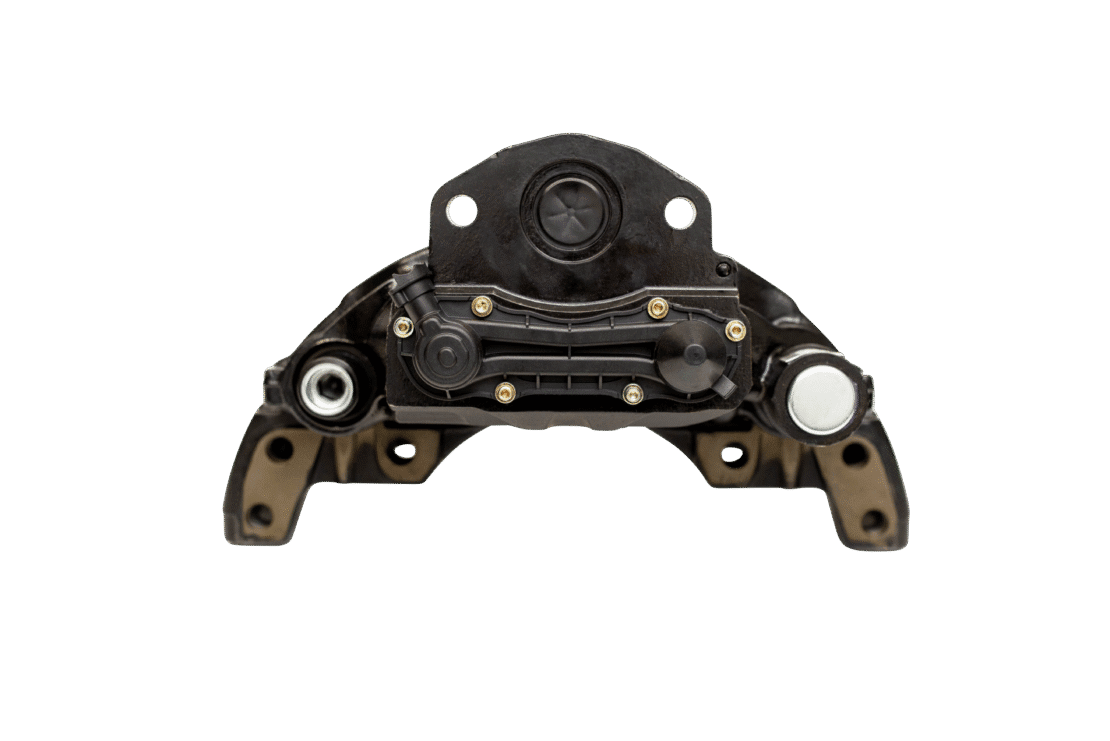
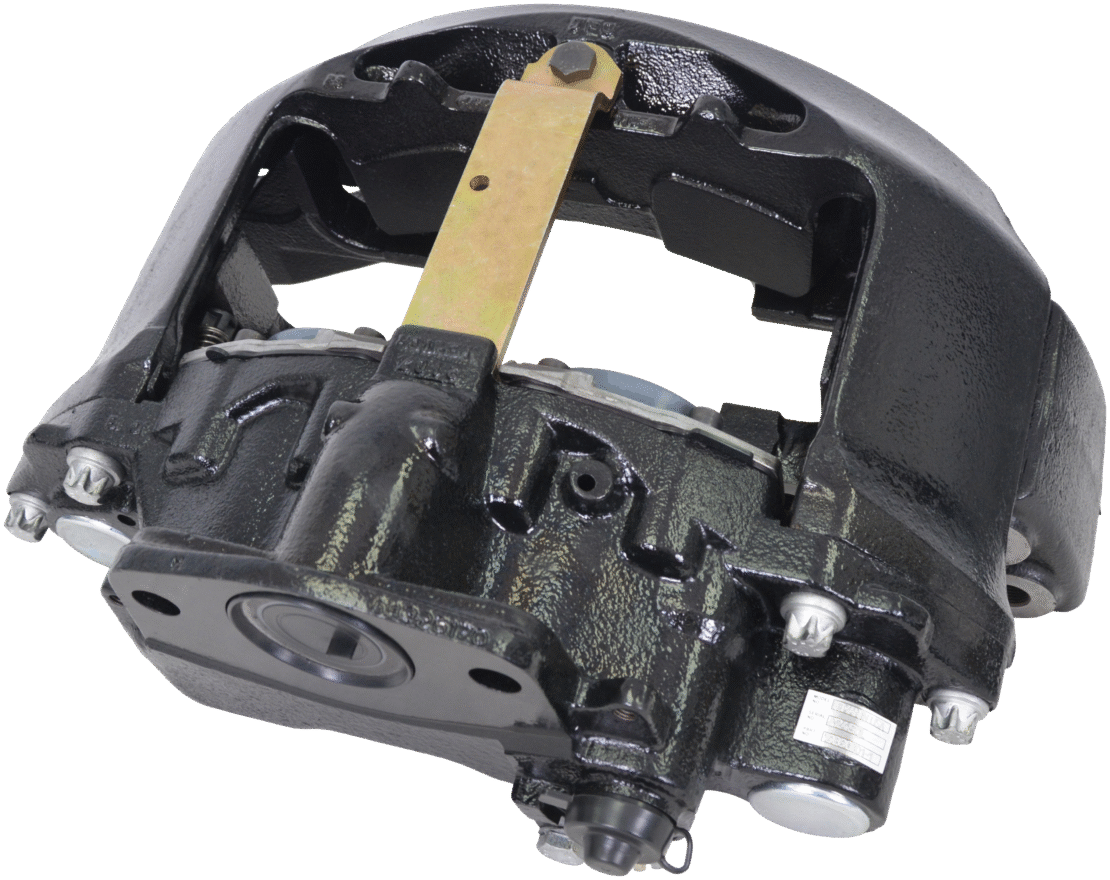
What are the common failures and risks of poorly rebuilt heavy-duty ADB calipers?
1. Thermal Runaway and Wheel-End Fires
A “frozen” or dragging caliper is the most common failure. If the internal adjuster fails or the guide pins seize, the pads stay in constant contact with the rotor. This creates immense friction and heat.
2. Uneven Braking
If a caliper on one side of an axle is underperforming, perhaps due to a seized piston or a leaking seal, the vehicle will “pull” toward the stronger brake during an application.
3. Rapid Component Destruction
A faulty caliper doesn’t just kill itself; it takes expensive components with it.
- The Rotor: Excessive heat from a dragging caliper causes “heat checking” or cracking in the rotor. Once a rotor is heat-cracked, it needs to be replaced.
- The Pads: A seized caliper will wear down one pad to the metal backing plate in a fraction of its normal lifespan.
- Wheel Bearings: Often ruined when units seize up.
- Pneumatic Braking System: Leaking calipers can damage the system with pressure loss.
For more depth on maintenance and repair of ADB systems, KIRKS ToolBOX webinar with Celect, covered common failures and maintenance tips with ADB systems.
Innovating Aftermarket Solutions for Heavy-Duty Calipers
KIRKS Approved Equal TM Remanufactured calipers provide transit authorities with what they need to service their air disc braking systems and keep their vehicles moving.
- Cost-effective: KIRKS remanufactured calipers offer significant savings compared to buying new. Most quality parts are available at less than one-third of the price of new OEM parts. Maintenance managers can confidently stay on budget and keep vehicles moving.
- Parts in stock: KIRKS has the inventory. Our remanufactured heavy-duty calipers for air disc brake systems are in stock, minimizing wait times and getting you what you need when you need it.
- High-demand Caliper Part Numbers:
Meritor: EX225H201, EX225H202, EX225H301, and EX225H302
Bendix/Knorr-Bremse: K003811, K003812, K002964, and K003965 - Quality assured: KIRKS Approved EqualTM remanufacturing process guarantees quality that meets or exceeds OEM standards for performance and reliability. KIRKS also provides samples to transit authorities for testing.
Heavy-duty ADB Calipers Go Green, Clean, and Pristine
Regrettably, too many cores end up in the scrap bin. While organizations work to find environmentally conscious solutions, their priority must be quality. KIRKS Core Care ProgramTM makes it easy to do both: every shop can go green while still getting high-quality parts.
KIRKS Caliper Core ProgramTM
The KIRKS Core ProgramTM is a quick win. Here it is in three easy steps:
- We coordinate your core pickup
- We pay your freight, and
- We don’t “nitpick” the condition of the cores to reject or adjust charges.
Remanufactured vs. Rebuilt Heavy-duty Calipers
Rebuilding processes typically involve cleaning a part and replacing only broken or worn components, even using replacement components from other used parts.
Remanufacturing, however, includes complete disassembly and the restoration of the product to OEM specifications. Process-driven remanufacturing replaces all critical wear parts and is followed by rigorous testing.
Our quality control process and state-of-the-art test equipment ensure that every part we sell with our Approved EqualTM Seal delivers reliability at a competitive price.
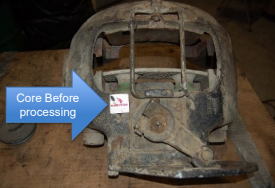
Core Before Processing

Finished Unit
KIRKS Caliper Remanufacturing Process: A High-level Overview
Step 1: Core inspection. Not all cores are created equal. A remanufactured caliper is only as good as the “core” it’s built on. We use a rigorous sorting process to ensure every casting is structurally sound. If there’s a hint of fatigue or hairline fractures in the housing, it’s out. We only move forward with OE-grade castings that can handle the thermal stresses of heavy-duty braking.
Step 2: Disassembly. Accepted cores are disassembled, and every component is inspected. We do not assume any component is functional for reuse. All critical wear components are disposed of immediately, and only those that meet the original manufacturer’s specifications are accepted for reuse.
Step 3: Mandatory Replacements. While some shops “inspect and reuse” small components, our process mandates 100% new seals, boots, and bushings. These are the first points of failure in the field, so we don’t leave them to chance.
Step 4: Cleaning and Qualification. Pressure washing and sandblasting clear debris, rust, and other contaminants. Delicate components are hand-washed. Parts are cleaned using specialized aqueous and media-blasting systems to remove every trace of road salt, grime, and oxidation. We re-inspect all cleaned components, searching for previously hidden defects and rejecting worn or damaged parts.
Step 5: Cast Cleaning and Inspection. Caliper castings and carriers require controlled burning to remove petrochemicals, followed by shot blasting for soot and other residues. These casts are again fully inspected.
Step 6: Premium Corrosion Protection. Components and casting receive treatment with the best rust-preventative powder coating on the market. The powder coating extends the lifetime of each caliper and outperforms OEMs in salt tests and 90+ hours of testing.
Step 7: Precision Machining. This is where the expert level comes in. We use precision machining to ensure the guide pins and bores meet exact tolerances. If the sliding mechanism isn’t perfect, you get uneven pad wear and dragging brakes, two of the biggest killers of fuel economy.
Step 8: Assembly and Testing. We rebuild the muscle from the inside out using a disciplined process. Assembly strictly follows the original manufacturer’s specifications, including specialized greasing and lubrication.
Fit and Function “Real-World” Simulation: A caliper might look good on a workbench, but we need to know the maintenance team will have no issues installing it and that it will perform reliably on a transit bus.
- The Anchor Plate Test: Every caliper is placed on a mount that mimics the actual vehicle’s anchor plate.
- Slide Verification: We perform a specialized slide test to ensure that guide pins move freely and haven’t locked up.
- Rotor Fitment Gauge: We use a precision gauge to ensure there are zero clearance issues. This reveals hidden defects, like a slight bend in the casting, that could cause misalignment on the road.
Finally, each part is serialized and tagged for tracking.
Common Heavy-duty Remanufactured Caliper Models In Stock
Visit our parts page for Remanufactured Air Disc Caliper parts from brands you trust:
| Meritor | GM |
| Bendix/Knorr-Bremse | FORD |
| WABCO |
Remanufactured Heavy-duty Caliper Confidence
As air disc brakes become more common in today’s transit applications, KIRKS is meeting the needs of transit authorities nationwide. With the KIRKS Approved EqualTM seal, we make it easy to confidently purchase remanufactured calipers, in stock, and with competitive pricing.
Assurance is included with every shipment because KIRKS parts include a 1-year, unlimited-mileage warranty.
Contact KIRKS to request a sample of our Approved EqualTM Remanufactured calipers. Talk with a parts specialist today. We’re your partner for parts.
Frequently Asked Questions (FAQs) About Heavy-Duty Remanufactured Calipers
1. What is the difference between “Rebuilt” and “Approved Equal™ Remanufactured”?
A “rebuilt” caliper is often just a fix-what’s-broken approach—only the failed components are replaced, and the rest of the unit is cleaned. Approved Equal™ Remanufacturing is a total restoration process. Every unit is 100% torn down, the casting is inspected for structural integrity, and every wearable part (seals, boots, bushings) is replaced with new components that meet or exceed OE specs.
2. Why should I choose remanufactured over brand-new OEM?
Choosing an Approved Equal™ remanufactured caliper allows you to escape the parts trap without sacrificing quality. You get the same performance, fitment, and safety standards as a new part, but at a significantly lower cost. Additionally, remanufacturing is a “green” process that keeps high-quality castings in the supply chain rather than the landfill.
3. Will using a remanufactured caliper affect my CSA score?
Actually, it helps protect it. Roadside inspectors look for uneven pad wear, dragging brakes, or visible leaks, all symptoms of low-quality or worn-out calipers. By installing a certified remanufactured unit, you ensure the braking system functions exactly as designed. Who wants to risk of out-of-service violations and high-point CSA hits?
4. How do you test the calipers before they reach my shop?
We don’t guess; we validate. Every caliper undergoes high- and low-pressure leak testing to ensure seal integrity across all braking scenarios. We also perform a Functionality Verification on the internal adjuster mechanism to ensure it maintains the correct pad-to-rotor clearance. See more on our testing process above.
5. What do I do with old caliper cores?
The KIRKS Caliper Core Program is a simple process where we coordinate the pick up and take care of the shipping costs.