
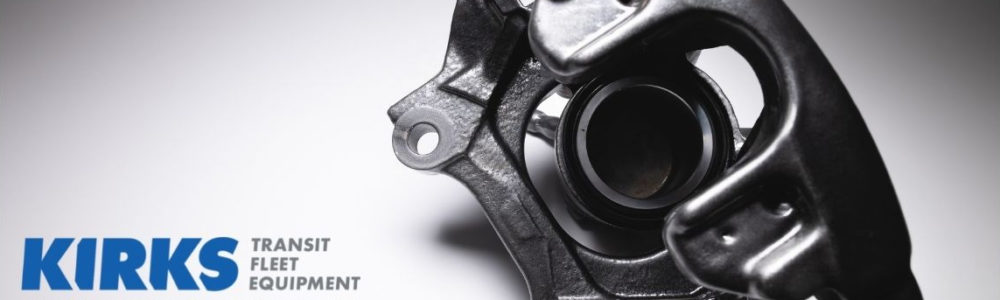
Serious Stopping Power: Air Disc Brake Systems for Transit Vehicles
Air disc brakes (ADB) are the preferred braking system for new transit vehicles. With their increased stopping control, efficiency, and lower maintenance costs, it’s easy to see why ADB systems are overtaking traditional drum brakes in transit and heavy-duty vehicles.
Maintenance teams require the best products available because their work transports people safely and keeps our world moving.
Heavy-duty Air Disc Brakes – Here’s a Quick Breakdown
The advantages of air disc brakes are due to the design of the system, which is composed of four main parts: a caliper, a rotor, brake pads, and a compressor.
- The Rotor: The rotor is a thin disc that rotates with the wheel.
- The Caliper: This is the muscle of the system. It houses the clamping mechanism and applies pressure to the brake pads to slow the rotor.
- The Compressor: Think of this as the “lungs” of the vehicle. It provides the pressurized air, managed by a governor, that activates the pistons to apply the brakes.
- Brake Pads: These are like the “tough skin” on the knuckles: they’re high-performance friction materials take the brunt of the heat and pressure to grip the rotor and bring the vehicle to a safe, steady stop.
Unlike drum brakes, ADB systems are exposed to outside air. Because of their vented design and heat-resistant materials, they dissipate heat more effectively. This provides a higher thermal capacity and less frequent servicing.
The Rotor: The “Backbone” of Stopping Power
The rotor is a thin, rotating disc that moves with the wheel, serving as the literal foundation for the braking process. It’s a simple concept, but in the world of heavy-duty transit, it has to be a beast.
Cool Under Pressure: Unlike enclosed drum brakes that suffer from “heat soak,” the rotor’s open design allows it to breathe. This prevents the dreaded “brake fade” and keeps your stopping distances short, even in wet weather.
See our line-up of Celect brand rotors.
The ADB Heavy-duty Caliper: Precision in Every Stop
While the compressor provides the “breath,” the caliper provides the muscle.
In a drum system, the components are encased. That leads to heat soak and labor-intensive repairs.
In contrast to the drum, an air disc caliper that is not enclosed allows for:
- Better Cooling: The open design prevents the “fading” often felt during heavy transit cycles.
- Faster Service: Inspections and brake pad replacement take only a quarter of the time compared to drum brake shoes.
- Improved Performance: Shorter stopping distance and better responsiveness in wet weather conditions
Looking for a deeper dive into heavy-duty calipers and how we remanufacture these critical components?
Check out our featured post on, Remanufactured Calipers: Restoring the “Muscle” to Your Air Disc Brakes to see how we provide “Approved Equal™” quality that meets or exceeds OEM specifications.
Visit this page for KIRKS Reman Caliper part numbers.
How the Air Brake Compressor Breathes (It’s the Respiratory System)
You can’t talk about stopping power without talking about how that power is generated. The air brake compressor is the starting point for the entire system.
- Inhale (Intake): The compressor pulls in air through a filter.
- Hold (Compression): Pistons pressurize the air to 120-130 PSI. This air is cleaned by a dryer and stored in reservoirs.
- Exhale (Distribution): When the driver hits the pedal, that “breath” is exhaled with force to the calipers.
A governor acts as the “brain stem” for this process, telling the compressor when to work and when to rest to optimize efficiency and lifespan. If your compressor is struggling (showing signs like slow air build-up or excessive oil passing), it puts the entire fleet at risk.
You can learn more about diagnosing these “respiratory” issues in our guide to Long Lasting Air Brake Compressors.
Brake Pads: The “Tough Skin” on the Knuckles
If the caliper is the muscle, the brake pads are the tough skin on the knuckles. These high-performance friction materials are the real heroes on the front lines, taking the brunt of the heat and pressure to grip the rotor and bring the vehicle to a safe, steady stop.
The Heat Eater: These pads are engineered to survive a thermal beatdown, dissipating heat effectively due to their vented design and specialized materials.
Overcoming Industry Challenges with Heavy-duty Air Disc Brakes
We know that fleet managers can often feel stuck in the “parts trap”—forced to choose between unreliable repairs, inferior aftermarket parts, or going back to the bus manufacturer for overpriced replacements.
- Cost & Availability: Global supply chain deficits have made rotors and calipers hard to find. KIRKS works to source parts through national distribution networks.
- Quality Concerns: Our Approved Equal™ promise means you don’t have to sacrifice quality for savings. KIRKS ReMan™ units meet or exceed OEM specifications before they ship.
- New Knowledge: As air disc brakes become the standard, your team needs to be equipped to meet it. We partner with you through custom training and technical support to ensure your technicians are highly skilled and confident.
Your Partner for Parts
Nothing is more critical than your air brake system. Don’t let a failing caliper or a weary compressor leave your fleet gasping for air. At KIRKS, we’ve been getting people out of the parts trap since 1946. We provide the expertise, the parts, and the partnership you need to keep your world moving.